

The Autodidact’s Path – I
1996-2003
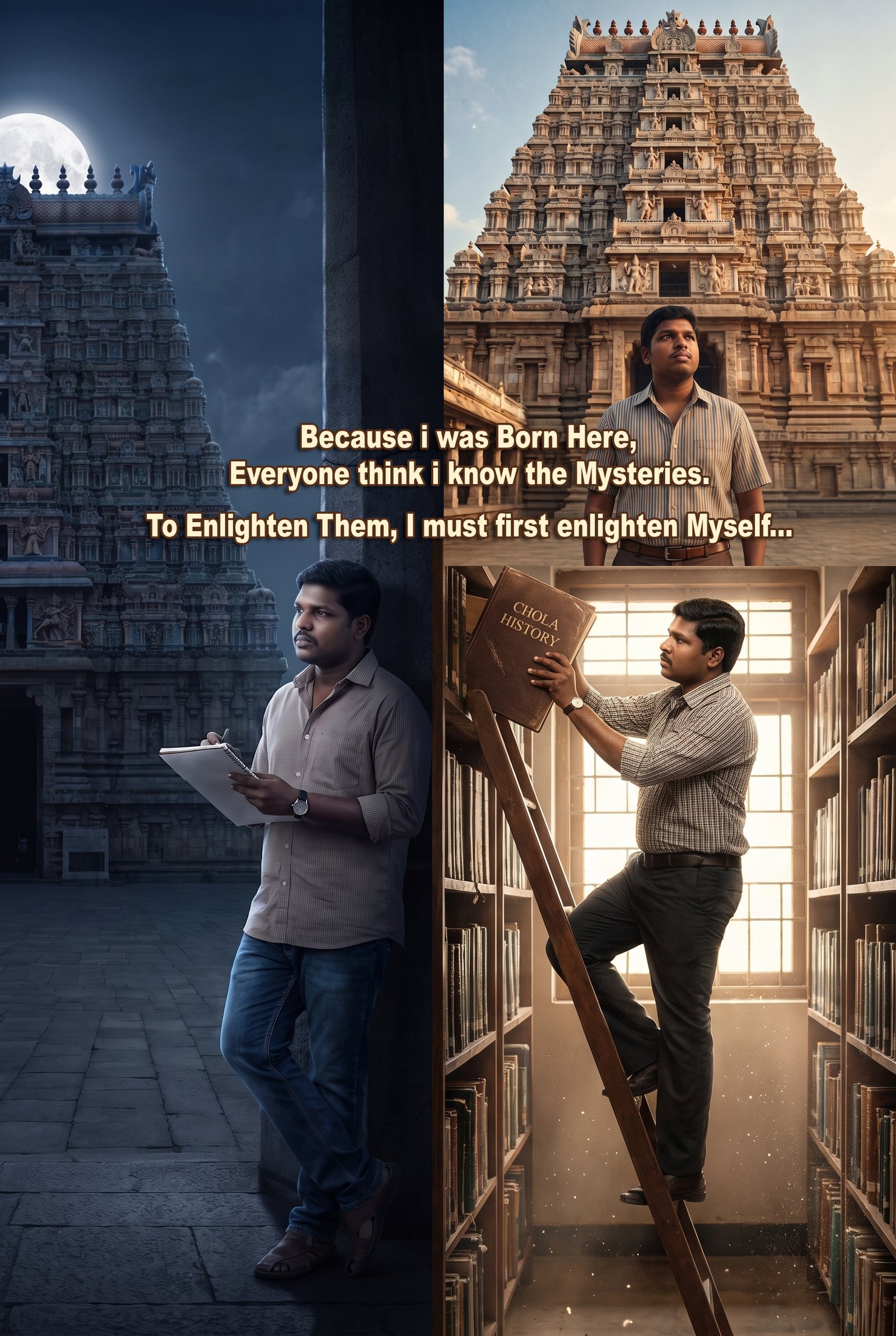
My biographical connection to Chidambaram began on July 3, 1979, at Kamaraj Government Hospital, when I was born. However, my return to Chidambaram to pursue my engineering degree signified the beginning of a big intellectual turning point in my life.
Even though I was born in Chidambaram, I pursued my early education from kindergarten to ninth standard in Salem and later education from tenth to twelfth standard in Chennai. Therefore, I didn’t have any knowledge about Chidambaram Temple.
But my fellow college students assumed that I had a deep understanding of Chidambaram Temple and often asked about the mythology of the temple; this triggered me to conduct my first organized study on the history and mythology of Chidambaram Temple.
My informal autodidactic research focused on two basic sources of information: the Annamalai University Library and the architecture of the Nataraja Temple itself. Both of these sources are primary sources of learning.

2003-2009
After completing my chemical engineering course from Annamalai University, I started a business in Kattumannarkoil in 2005. From then on, my daily journey was along the banks of the well-known Veeranam Lake, the biggest artificial man-made reservoir constructed during the Chola era.
Astonished by the vastness and beauty, I began spending most of my leisure time on the banks of Veeranam Lake. I made some acquaintances who were history enthusiasts, and because of them, I happened to reread the novel Ponniyin Selvan in detail. This increased my engagement with the history of the Chola empire.
In the short run, I had to face some hard obstacles in my life. As a result of substantial personal and financial setbacks that I had experienced, my existential introspection had developed into an analytical investigation of the landscape.
The proposed purpose behind the artificial man-made lake was agriculture, but agriculture in this landscape is comparatively worse than on the other side of the lake.
2009-2011
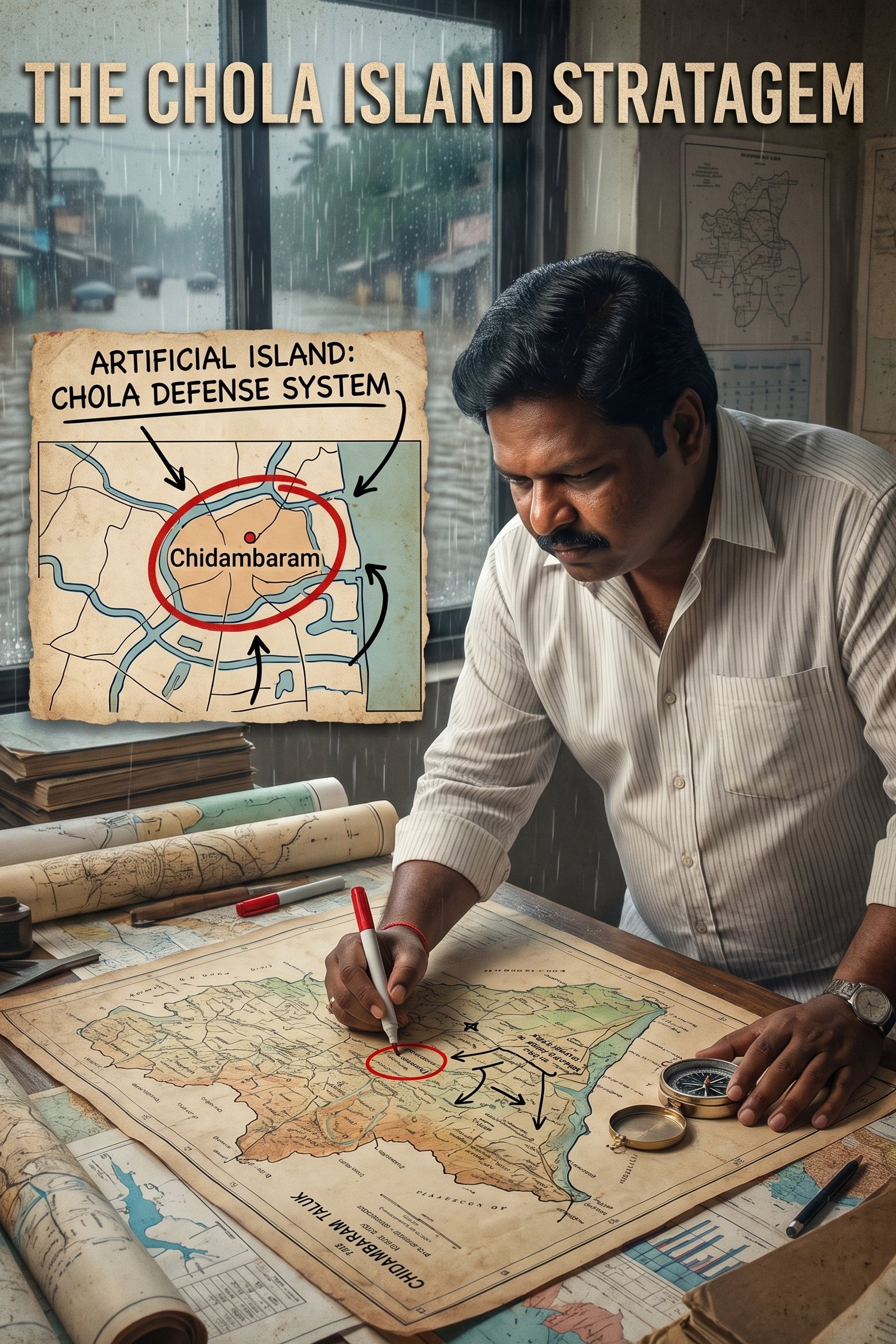
After conducting a fresh assessment of the physical geography of the Veeranam Lake landscape, I found that the Chidambaram Taluk has been transformed into an artificial island by the construction of Veeranam Lake. The only way to reach this island was over bridges.
Moreover, I discovered several hydro-geomorphological abnormalities. Veeranam Lake is situated approximately 33 kilometres from the Bay of Bengal, and it is in a relatively advantageous location between the two rivers Kollidam and Vellar. The surrounding landscape is marshy wet land, and the water level is only around 30 feet deep; this raises questions about whether construction of Veeranam Lake was intended for agriculture or not.
Taking into account various scenarios of excessive rainfall in this landscape, the red alert notifications this area receives for flooding, and the fact that if the banks of Veeranam Lake collapse due to the excessive water accumulated, it would cause severe flooding, and the Chidambaram temple, including its pagodas, would be fully submerged under water.
I eventually came up with the hypothesis that the Cholas had designed this enormous earthwork as a strategic hydrological system.
2011-2013
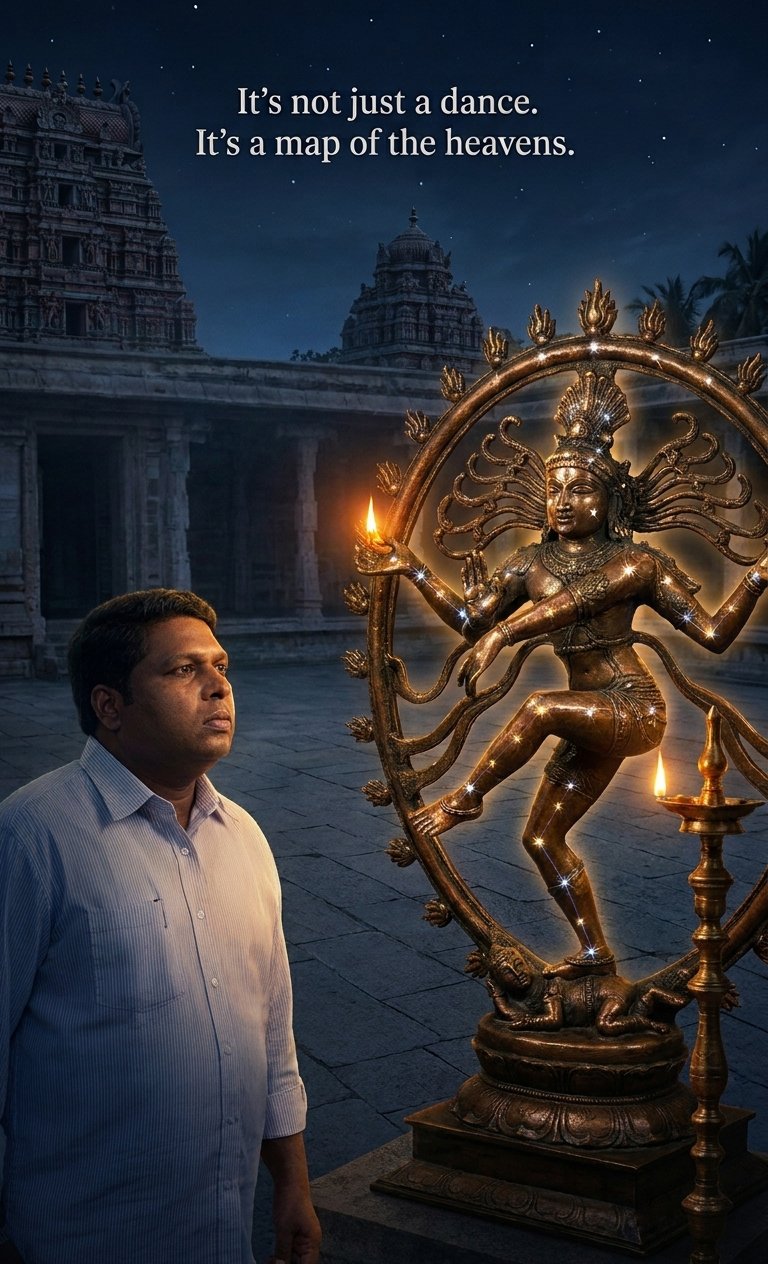
Finally, in the year 2011, I professionally completed engineering and started preparing for competitive examinations along with conducting extensive historical research. Over the course of this time span, three critical observations concerning the Chidambaram Temple were gathered.
Despite severe geopolitical rivalry, key South Indian dynasties, such as the Cholas, Pandyas, Cheras, and Pallavas, constantly supported, extended, and respected the Chidambaram sanctuary. This allowed the sanctuary to flourish and grow over time.
Throughout the historical epochs, the structure underwent several alterations and additions. The remarkable spiritual and social significance of the location was brought to light by the fact that this commitment was made during many dynasties spanning multiple generations.
The temple complex uniquely houses both the Saivite primary deity (Nataraja) and a prominent Vaishnavite shrine (Govindaraja Perumal) within the same immediate precinct.
2014
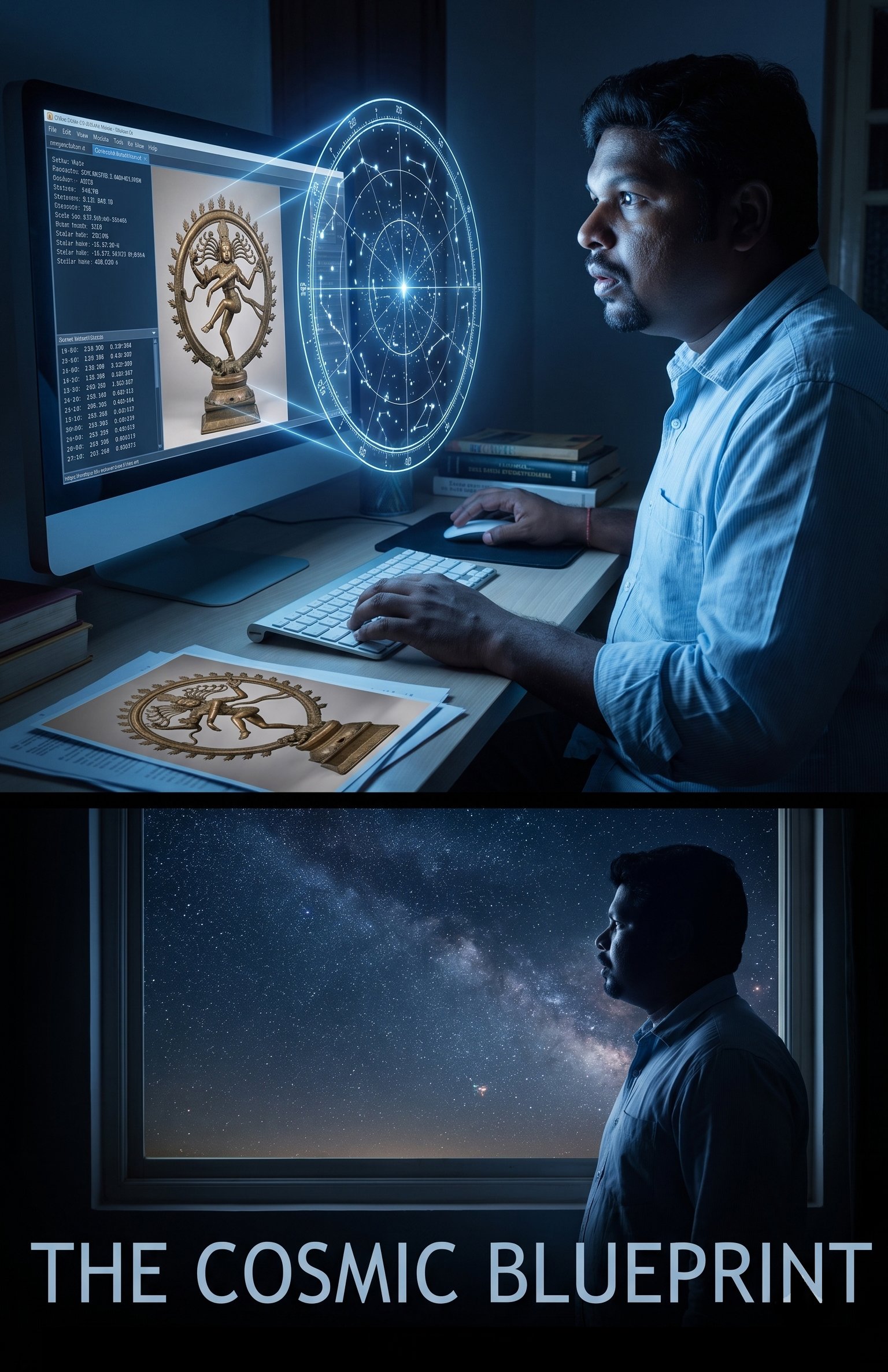
In August 2013, I relocated to Chidambaram town to conduct focused field research. On Friday, January 24, 2014, a cognitive synthesis happened. There was a procession happening at the nearby Thillai Govindaraja shrine; the whole crowd in the temple was busy with that, and the Nataraja shrine was eventually empty.
For the first time in my life, I had a long session with the Nataraja icon. Many hypotheses and correlations from all the informal autodidactic research findings from my past were running through my mind. Suddenly, a furious idea hit my brain. I tried to fit a famous constellation with the Nataraja icon and found it to have a structural alignment with many constellations in the sky.
After conducting subsequent empirical correlations with stellar mapping software and celestial charts, it was discovered that there is a remarkable proportional correspondence between the specific iconographical features of the Nataraja icon and many identifiable star constellations across the night sky. This provided a fresh viewpoint on the cosmic symbolism of the Nataraja icon
Wonderful outline about your findings..!
With ❤️ Peruvaagai
Sirappu